“The Great Sioux Massacre” is a violent Western film that tells the story of the Battle of Little Bighorn in 1876, where the US Army’s Seventh Cavalry, led by General Custer, faced off against Native American tribes. The film portrays the Native Americans as fierce warriors defending their land, while the US Army is depicted as ruthless and determined to conquer. The battle scenes are intense and gripping, with blood and bullets flying as both sides fight to the death. Ultimately, the movie ends with a tragic massacre that marks a turning point in American history.”
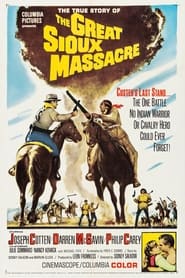
CLICK HERE🠇🠇🠇🍿_Watch The Great Sioux Massacre 1965 English Subtitles_
Review
“The Great Sioux Massacre”: American Aggression Unveiled
When it comes to the depiction of historical events on the silver screen, one can never be too certain about the accuracy of the portrayal. However, in 1965, Hollywood decided to take a shot at telling the story of General George Custer’s notorious massacre of Native Americans at Little Bighorn. The result was “The Great Sioux Massacre”.
Directed by Sidney Salkow and produced by Albert Zugsmith, “The Great Sioux Massacre” tells the story of General Custer’s disastrous defeat at Little Bighorn in 1876. The film stars Joseph Cotten as Colonel Nelson Miles, who is sent to assess the situation after Custer’s humiliating defeat. Philip Carey plays General Custer and Julie Sommars as Mrs. Elizabeth Custer.
The movie was met with mixed reactions from audiences and critics alike. Some praised it for its visual depiction of the battle scenes while others criticized it for its lack of historical accuracy. However, one thing is certain – “The Great Sioux Massacre” doesn’t shy away from showing American aggression and brutality towards Native Americans.
Viewers are quickly introduced to a world where Native Americans are oppressed and marginalized by white settlers who are determined to expand their territories. Historical fact or not, this narrative is an important reminder that colonialism had real consequences for Native American communities.
Throughout the film, we see Native Americans fighting back against their oppressors with fierce determination and resourcefulness. Their bravery in battles against superior numbers is portrayed vividly on screen with stunning cinematography that captures every moment in graphic detail.
The plot unfolds around a series of skirmishes between white settlers and native tribes as tensions mount between them. One particularly chilling scene shows soldiers attacking women and children without remorse or hesitation – an all-too-real reflection of the horrors committed against Indigenous peoples during this time period.
Despite some inaccuracies in its portrayal, the film is still an essential part of any discussion about American history. It forces viewers to question the narratives we’ve been taught about Manifest Destiny and colonialism and to confront the brutal truth of our past.
The cast does an excellent job of portraying the complex emotions and motivations of their characters. Philip Carey’s Custer is a fascinating portrayal of a man consumed by his own ambition, while Joseph Cotten’s Colonel Miles offers a more sympathetic perspective on the events unfolding around him.
Meanwhile, Julie Sommars’ portrayal of Elizabeth Custer is a powerful reminder that women played an important role in shaping history, even when their voices were silenced or ignored.
The film’s score, composed by Richard LaSalle, adds to its dramatic tension with hauntingly beautiful melodies that accentuate each scene’s emotional intensity. The music perfectly captures the sense of foreboding that permeates every frame.
Although the movie faced accusations of racism, “The Great Sioux Massacre” remains a remarkable depiction of one of America’s darkest periods in history. It offers an unflinching look at the violence and oppression that Native Americans experienced at the hands of white settlers and soldiers who were determined to claim their land for themselves.
Despite its flaws, this film has stood the test of time as an important piece in American history storytelling. It continues to captivate audiences with its raw portrayal of human greed and power plays.
In conclusion, “The Great Sioux Massacre” takes us on a journey into America’s history filled with action-packed battle scenes mixed with touching moments shared between characters. The movie captures essential aspects of American colonialism that ought not to be ignored such as racial discrimination, imperialism among others. The acting was superb with Joseph Cotton’s Colonel Nelson Miles standing out as he brings life into his character effortlessly. The music complements the film perfectly providing eerie melodies which capture tense moments effectively. While it may not have been entirely factual, it’s an invaluable addition to American history discourse, and if nothing else, it serves as a reminder of the brutal past that America has endured and how the fight for freedom continues today.
Technical Data
- Runtime : 91
- Release : 1965-04-25
- Genre : Drama, Western, History
- Cast : Joseph Cotten as Major Marcus A. Reno, Darren McGavin as Captain Frederick William Benton, Philip Carey as Colonel George Armstrong Custer, Julie Sommars as Caroline Reno, Nancy Kovack as Libbie Custer
- Crew : Sidney Salkow as Director, Sidney Salkow as Story, Marvin A. Gluck as Screenplay, Marvin A. Gluck as Story
- Popularity 3.234
- Budget : 0
- Revenue : 0
- Company : Leon Fromkess-Sam Firks Productions, Columbia Pictures
- Summary : Colonel Custer (Philip Carey), an outspoken believer in fair treatment for the Indians, is ousted from his post and forced into retirement. Fueled by ambition when a Senator Blaine (Don Haggerty) convinces him to run for President, Custer decides to upstage General Terry (Frank Ferguson) at Little Big Horn.
- Tagline : Blood-Vengeance Clashed With Custer’s Cavalry!
